Xplorich
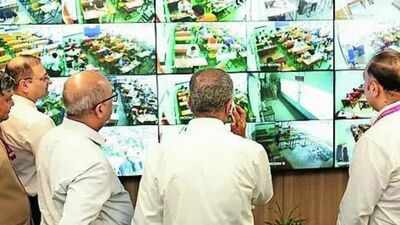
NEW DELHI: Long before candidates reached NEET-UG exam centres Sunday, the day’s first feeds were already streaming into NTA’s Okhla headquarters, where, sources said, around 250 observers had taken their places. From there, they – with the help of AI tools – watched exam rooms, tracked biometric verification and responded to alerts from a network spanning 551 Indian cities and 14 overseas locations.This was the nerve centre of an exam involving about 22.7 lakh candidates, 5,440 centres and more than 95,000 exam rooms – the apex of a monitoring system extending through the education ministry, 34 centrally funded institutions, state-level control rooms and district collectorates. No group of observers could continuously watch every frame from the 1,38,560 CCTV cameras installed across centres. The system, therefore, combined human surveillance with AI tools that scanned feeds and flagged unusual movement or possible violations. Virtual observers could switch to a centre, examine its live feed and pass an alert down the chain for verification and action.The multi-tier structure was meant to prevent Okhla from becoming the only point of response. Ahead of the exam, NTA director general Abhishek Singh said the agency was working with “all stakeholders concerned”, including district coordination committees headed by district magistrates, state police and intelligence agencies, to ensure smooth conduct.The cameras were only one part of the picture reaching the headquarters. Centre-level officials reported whether gates had opened on time, candidates had cleared frisking and biometric checks, jammers were functioning and the examination had begun as scheduled. Updates moved through dashboards, telephone lines and designated officials.A centre systems officer was stationed at each venue to keep its cameras and technical systems working. Around 6,700 physical observers were deployed, while biometric personnel, invigilators, police and district officials formed the on-ground response network. An alert noticed remotely could be checked by the observer or systems officer at the centre and escalated to district or state authorities. NTA described the exercise as a “whole-of-govt effort” involving around seven lakh officials, including police, observers and examination staff. “Team Bharat” was how the agency characterised the network of central ministries, state govts, security forces, banks and technical agencies assembled for the test.The scale was closer to an election operation than a conventional entrance examination. NTA deployed 51,311 signal jammers, 38,795 frisking personnel and 48,448 workers for biometric verification and face authentication. Two invigilators were assigned to each room. On an average, 40 to 50 security personnel were positioned at every centre.The command network underwent a nationwide mock drill on June 20. Education minister Dharmendra Pradhan, who visited the headquarters while the test was under way, had said govt was taking all necessary measures while maintaining “complete confidentiality” from the preparation of the question papers through every subsequent stage.By 5.15pm, the exam was over. “So far, from what we have heard, everything went well. We have received good reports,” Singh said. He added that NTA had received no complaint or email alleging a paper leak. Inside Okhla, thousands of centres had been compressed into one flow of feeds, dashboards, calls and alerts – a room expected to spot when something, somewhere, moved out of line.