Xplorich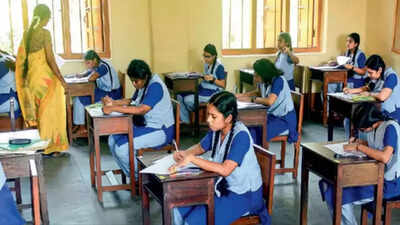
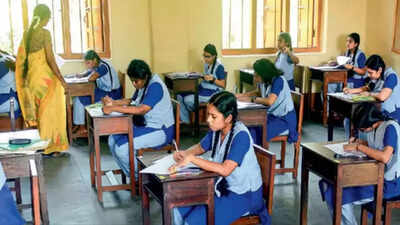
New Delhi: The National Council of Educational Research and Training (NCERT) has, for the first time, introduced a section on the Emergency in a Class IX textbook, describing it as “one of the major challenges” to Indian democracy during a period when a majority of Fundamental Rights were suspended.The reference has been included in NCERT’s newly developed social science textbook, Understanding Society: India and Beyond, within a chapter that examines the strengths of Indian democracy alongside the challenges it has faced.An NCERT official confirmed that this is the first time a dedicated section on the Emergency has been included in a Class IX textbook. according to news agency ANI.The development comes exactly 51 years after the proclamation of the Emergency in India on June 25, 1975, and a year after the country marked its 50th anniversary.“One of the major challenges to democracy in India was recorded when an Emergency was imposed in 1975-77. In the early 1970s, public dissatisfaction with the government led by Indira Gandhi was growing. Rising unemployment, inflation, and allegations of misgovernance led to widespread protests,” the textbook section reads.The chapter further notes, “In June 1975, a National Emergency was imposed by the government on the grounds of internal disturbance. During this period, a majority of Fundamental Rights were suspended, the press was censored, and numerous political leaders and activists were arrested. Democratic institutions came under severe strain, and citizens’ freedom was restricted.”The textbook also highlighted the role of Jayaprakash Narayan in mobilising opposition to the Emergency.It notes that mass movements led by Jayaprakash Narayan, popularly known as ‘lok nayak’, mobilised students and citizens, particularly in Bihar and Gujarat. It adds that after the Emergency was lifted in 1977 and general elections were held, “the defeat of the ruling government demonstrated the strength of Indian democracy and highlighted the importance of Democracy.”The section forms part of a broader discussion on challenges facing democratic systems. Alongside the Emergency, the chapter identifies fake news, misinformation, damaging public property, violation of public rules, poverty, regionalism, social discrimination and gender inequality as challenges to democratic practice.The revised textbook also features a new section, ‘Democracy and You’, introduced for the first time to help students relate classroom lessons to their responsibilities as citizens and active participants in democratic processes.Beyond the Emergency, the book places emphasis on India’s democratic traditions, institutions and citizen participation. It includes a section describing the media as the ‘fourth pillar of democracy’ and highlights its role in amplifying public concerns and safeguarding democratic values.The Emergency period between June 1975 and March 1977 saw the suspension of fundamental rights, increased preventive detentions, restrictions on the media and constitutional amendments that altered institutional powers. A large-scale sterilisation programme was implemented during the period. Following the withdrawal of the Emergency, an inquiry was established and legal provisions were amended to regulate the future use of Emergency powers.