Xplorich
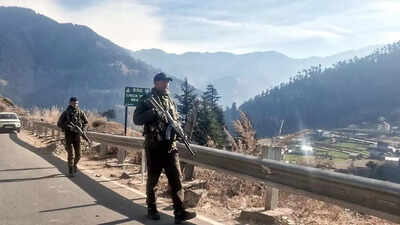
A top operative of Lashkar-e-Taiba, Umer Harris alias “Khargosh” (rabbit), with roots in Khyber Pakhtunkhwa, is now believed to be in Saudi Arabia after fleeing India using a forged passport, officials told PTI on Sunday. The document was issued under the name “Sajjad”, with Harris posing as a resident of Rajasthan.The probe into the LeT terror module is being led by Srinagar Police, which has shared details with central agencies, raising concerns over systemic loopholes that enabled such misuse, officials said.The case, registered earlier this month by the Jammu and Kashmir Police, is likely to be handed over to the National Investigation Agency (NIA). Meanwhile, key details have already been shared with state police forces to enable swift action and plug critical gaps, officials told PTI.Contrary to earlier reports that linked Umer Harris to Karachi, investigators have now established that he hails from Khyber Pakhtunkhwa in Pakistan.He reportedly joined Lashkar-e-Taiba to evade police action, with multiple arson cases pending against him in Karachi, before being pushed into Jammu and Kashmir by the terror outfit in 2012.Harris earned the alias “Khargosh” for his ability to move swiftly and evade the security dragnet. According to investigators, after infiltrating the Kashmir Valley from the northern side, he lived across Bandipora and Srinagar, eventually marrying the daughter of an LeT Over Ground Worker (OGW). The nikah was conducted in Jaipur under his assumed identity, “Sajjad”.Officials said the marriage documents later became crucial in supporting his application for an Indian passport, a revelation that has raised serious questions about lapses in verification systems. The unravelling of the inter-state module by the Srinagar Police has exposed systemic loopholes, particularly how a passport could be issued in Rajasthan despite established checks. Also read: Not card but code, identity in terror-scarred Pahalgam goes QRInvestigators believe Harris fled to Indonesia and later moved to Saudi Arabia between 2024 and 2025 using another forged travel document. Efforts are now under way through diplomatic channels to secure his deportation.The fresh details surfaced after Srinagar Police busted what officials described as a “deep-rooted” inter-state LeT module, arresting five operatives, including Pakistani terrorist Abdullah alias Abu Hureira, who had been on the run for 16 years and had established bases outside Jammu and Kashmir.The arrest of Abdullah, along with another Pakistani national, Usman alias Khubaib, marks a major breakthrough, coming six months after the dismantling of a “white-collar” terror cell linked to Faridabad’s Al Falah University.During interrogation, Abdullah revealed details of his and Harris’ movements across India, particularly in Rajasthan, Haryana and Punjab. This included the Jaipur marriage, after which the bride’s father was detained for allegedly being aware of Harris’ true identity, officials said.The operation, launched on March 31 and closely monitored by DGP Nalin Prabhat, has also shed light on the funding and financial networks of LeT. Investigators say the group relied heavily on forged identities and documents to build a multi-state network.Three Srinagar residents, Mohammad Naqeeb Bhat, Adil Rashid Bhat and Ghulam Mohammad Mir alias Mama, were among those arrested, accused of providing shelter, food and logistical support. The network began to unravel with the arrest of Naqeeb Bhat from the Pandach area, where police recovered a pistol and incriminating material.During questioning, Bhat admitted his links with LeT, saying he procured arms from another associate, Adil Rashid of Zakoora, and facilitated support for foreign terrorists. His disclosures led police to Mir and Rashid Bhat, both active operatives, and helped uncover multiple hideouts in forested areas around Srinagar.Officials said the two Pakistani terrorists are categorised as ‘A+’ militants and had infiltrated India around 16 years ago, remaining active across the Kashmir Valley while “commanding” around 40 foreign terrorists over the years, most of whom have since been neutralised.The bust comes nearly six months after the exposure of the “Al Falah module” in November 2025, when a Srinagar Police probe uncovered a network of radicalised professionals, many of them doctors.One of the accused, Al Falah University’s Umer-un Nabi, was behind the explosives-laden car that detonated outside the Red Fort on November 10, killing more than a dozen people. Officials said he had earlier made unsuccessful attempts to join terror groups in 2016 and 2018.