Xplorich
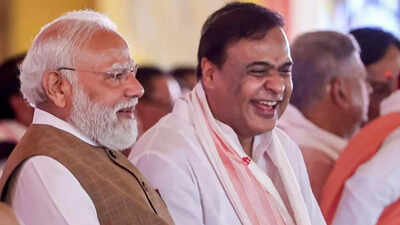
Like Odysseus emerging from years of conflict and uncertainty to reclaim his place in Ithaca, Assam chief minister Himanta Biswa Sarma’s decade-long journey in the BJP reflects his transition from an “outsider” in the Sangh-dominated party to one of its most trusted troubleshooters in a region where the BJP was once little more than a political footnote.Taking oath for a second time as Assam chief minister on Monday after delivering an overwhelming mandate to the BJP-led NDA, Himanta Biswa Sarma’s leadership arc within the party has been almost inversely proportional to the Congress’s precipitous decline in Assam and, by and large, the entire Northeast.
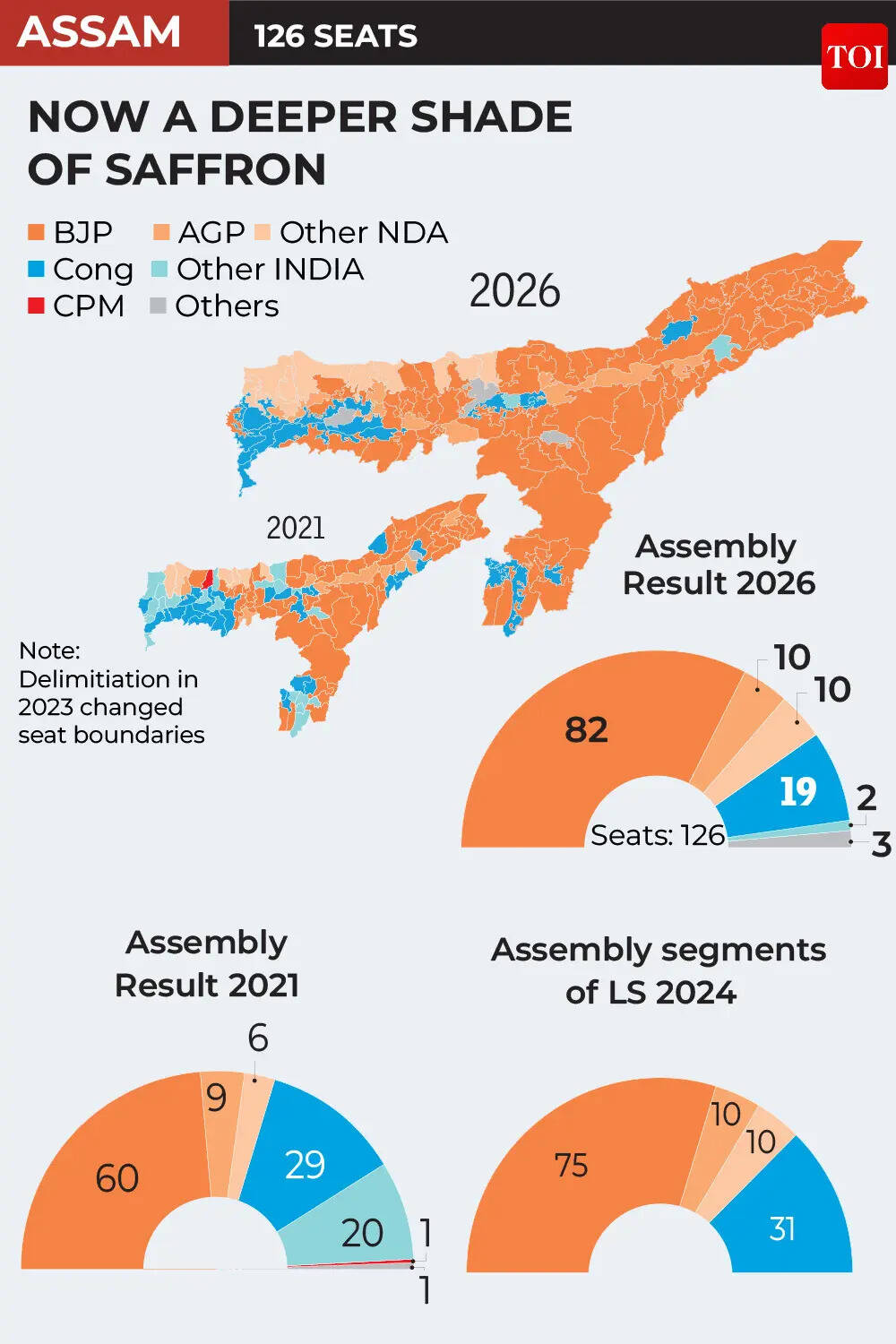
Deeper shade of saffron
Himanta’s firm hold over the Assam BJP stemmed largely from his ability to meet the high command’s expectations on electoral expansion, organisational control and, most importantly, negotiating peace accords in regions that had long remained politically volatile.After winning the BJP a brute majority in the 2026 Assam assembly polls, the question now is whether Himanta Biswa Sarma stands at par with chief ministers like Yogi Adityanath and Devendra Fadnavis, who are widely regarded as disciplined Sangh loyalists and potential next generation leaders of the BJP in the post Modi-Shah era.In a party shaped by the RSS ecosystem and its unwritten tests of “ideological purity”, Sarma remains something of an aberration, with no saffron lineage from his youth, no years as a pracharak and not even a dramatic ideological transformation story. He joined the BJP on August 23, 2015, after spending 14 years in the Congress mastering the power politics of Guwahati and Delhi.The big transitionSarma’s political career began far removed from the saffron fold as he joined the Congress in the 1990s and won the Jalukbari seat in Guwahati in 2001, marking the beginning of an electoral streak that saw him secure five consecutive victories from the constituency, four on a Congress ticket and one with the BJP. By 2006, he had emerged as one of chief minister Tarun Gogoi’s most trusted lieutenants, playing a central role in managing the Congress’s assembly campaigns in both 2006 and 2011.The 2011 election, in particular, cemented Sarma’s reputation as a formidable political strategist after the Congress secured an unprecedented 78 seats in the 126-member assam assembly, the party’s best-ever performance in the state. During his 12 years in the Gogoi cabinet, Sarma handled several key portfolios, including Finance, Health, Education, Agriculture and Planning.However, Sarma’s rise ultimately collided with a dilemma that has long shaped the Congress party’s internal power structure, balancing the interests of entrenched political legacies against the ambitions of influential outsiders. In a succession battle with the Gogoi family, Sarma was sidelined when Gaurav Gogoi was projected as the future face of Assam Congress leadership instead of him.
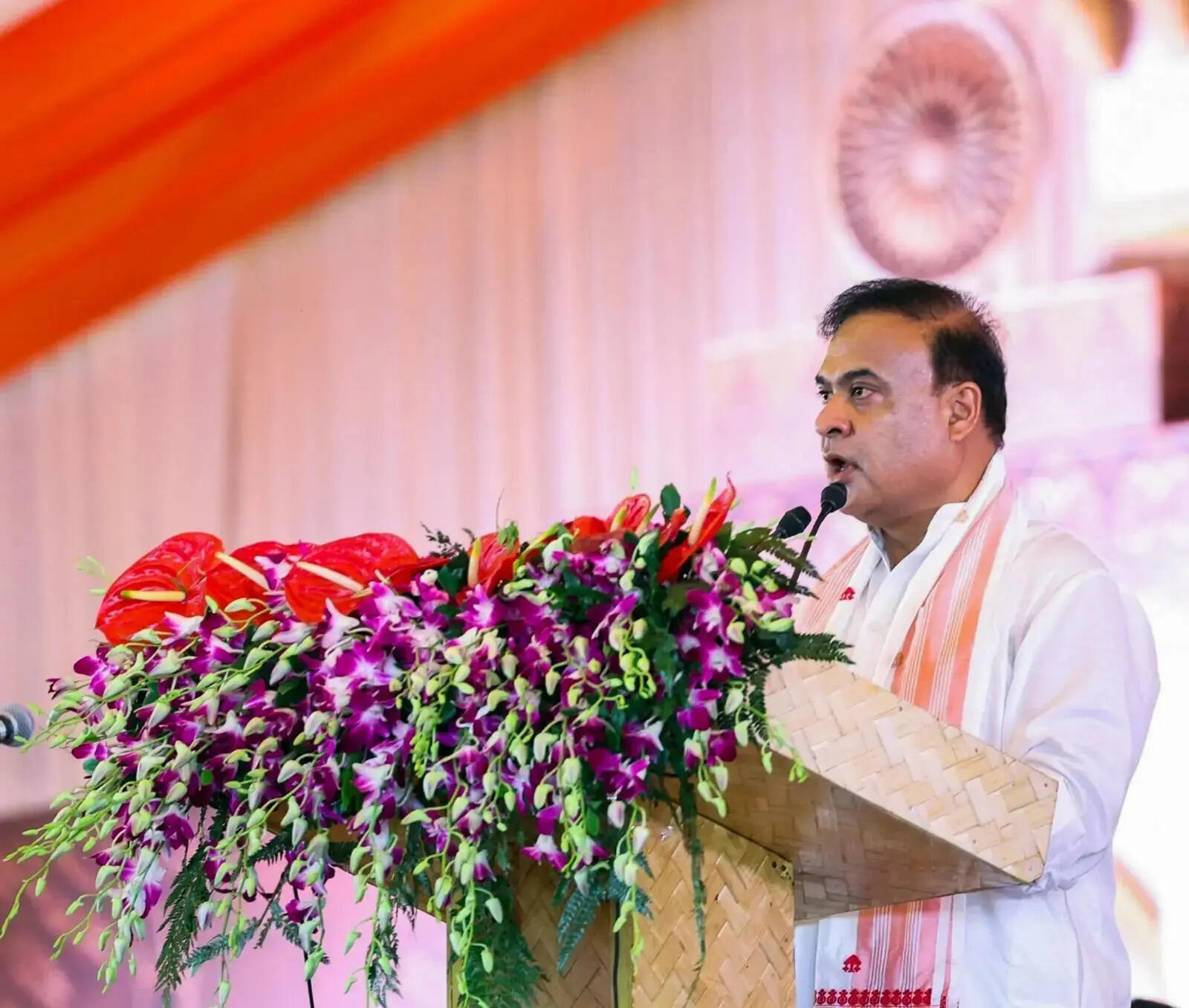
BJP leader Himanta Biswa Sarma takes oath as the Chief Minister of Assam for the second consecutive term during the swearing-in ceremony at Veterinary College ground in Khanapara, in Guwahati on Tuesday. (ANI)
When a section of Congress legislators from Assam began backing Sarma as a potential successor to Tarun Gogoi in 2014, the then chief minister instead projected his son, Gaurav Gogoi, as a prominent face of the party’s next generation. The development widened the rift between Sarma and the Congress leadership, despite his central role in managing the party’s electoral machinery in Assam.The tensions deepened amid reports that Rahul Gandhi declined to meet a group of dissatisfied Assam Congress leaders who had travelled to Delhi seeking an audience with the party high command. The episode came to symbolise, for many within the state unit, the growing disconnect between the Congress leadership and its regional power centres.Sarma resigned from all Congress positions on July 21, 2014, and stepped down from the Assam Assembly on September 15, 2015, formally ending his 14-year association with the party. When news of his move to the BJP emerged on August 23, 2015, Tarun Gogoi called the switch, “good riddance,” and Himanta a “trouble monger”.
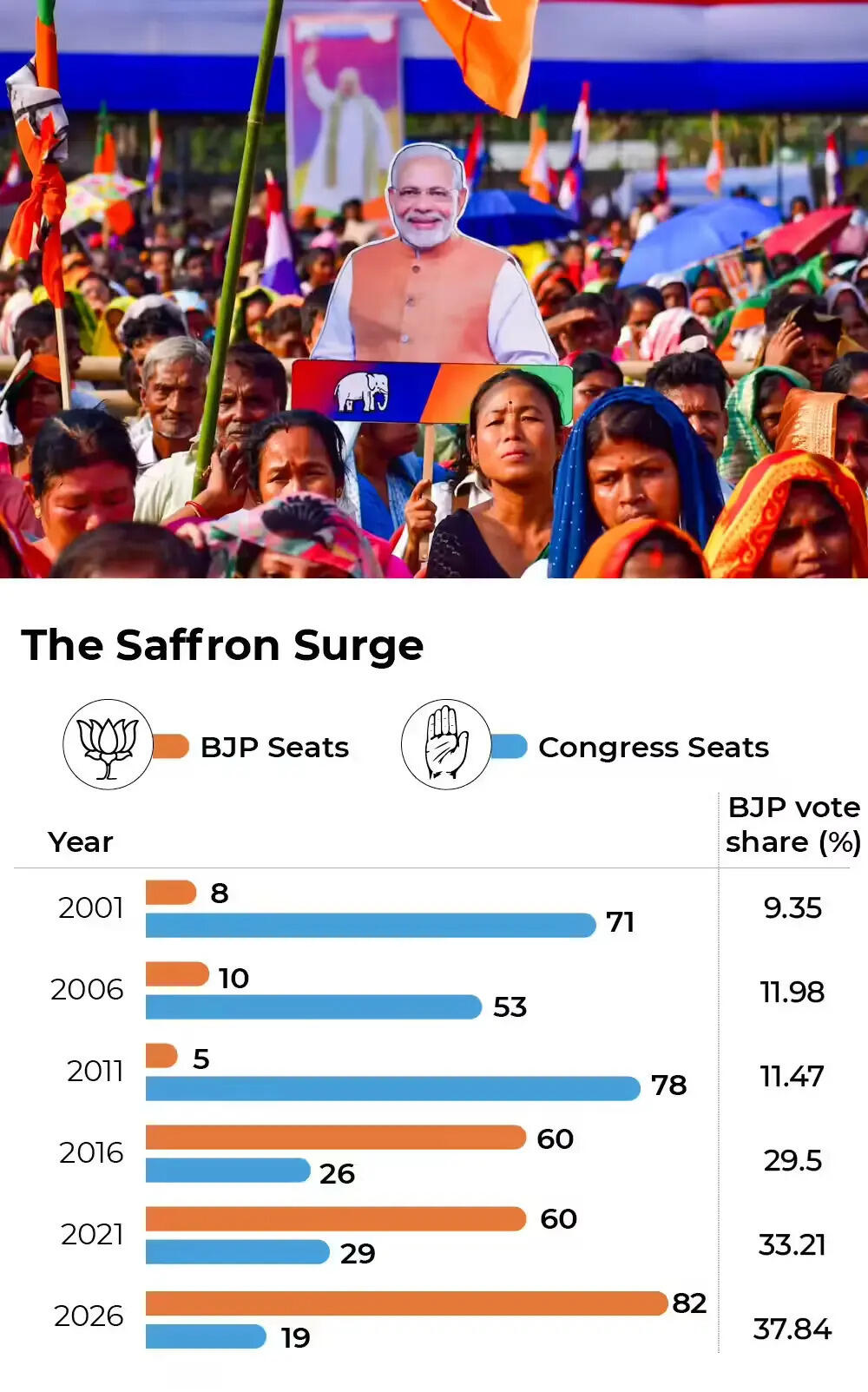
Congress vs BJP in Assam
Less than a year later, the BJP registered a historic victory in Assam in the 2016 assembly elections, with “trouble monger” Sarma playing a pivotal role in the party’s expansion across the Northeast.Mission NortheastWhen Himanta joined the BJP, Amit Shah, then the BJP’s national president, entrusted him with responsibility to “draw the blueprint for ousting Congress” in 2016. At the time, BJP’s political footprint in the Northeast was negligible with eight Lok Sabha seats uncovered, zero chief ministers, minimal organisational presence. However, Sarma transformed an impossible assignment into inevitability.First, Himanta played a central role in stitching together the National Democratic Alliance (NDA) coalition for the 2016 Assam assembly elections because of which the Bharatiya Janata Party (BJP) won 60 seats, while its allies, the Asom Gana Parishad (AGP) and the Bodoland People’s Front (BPF), secured 14 and 13 seats respectively, giving the alliance a commanding 87 seats in the 126-member Assembly.
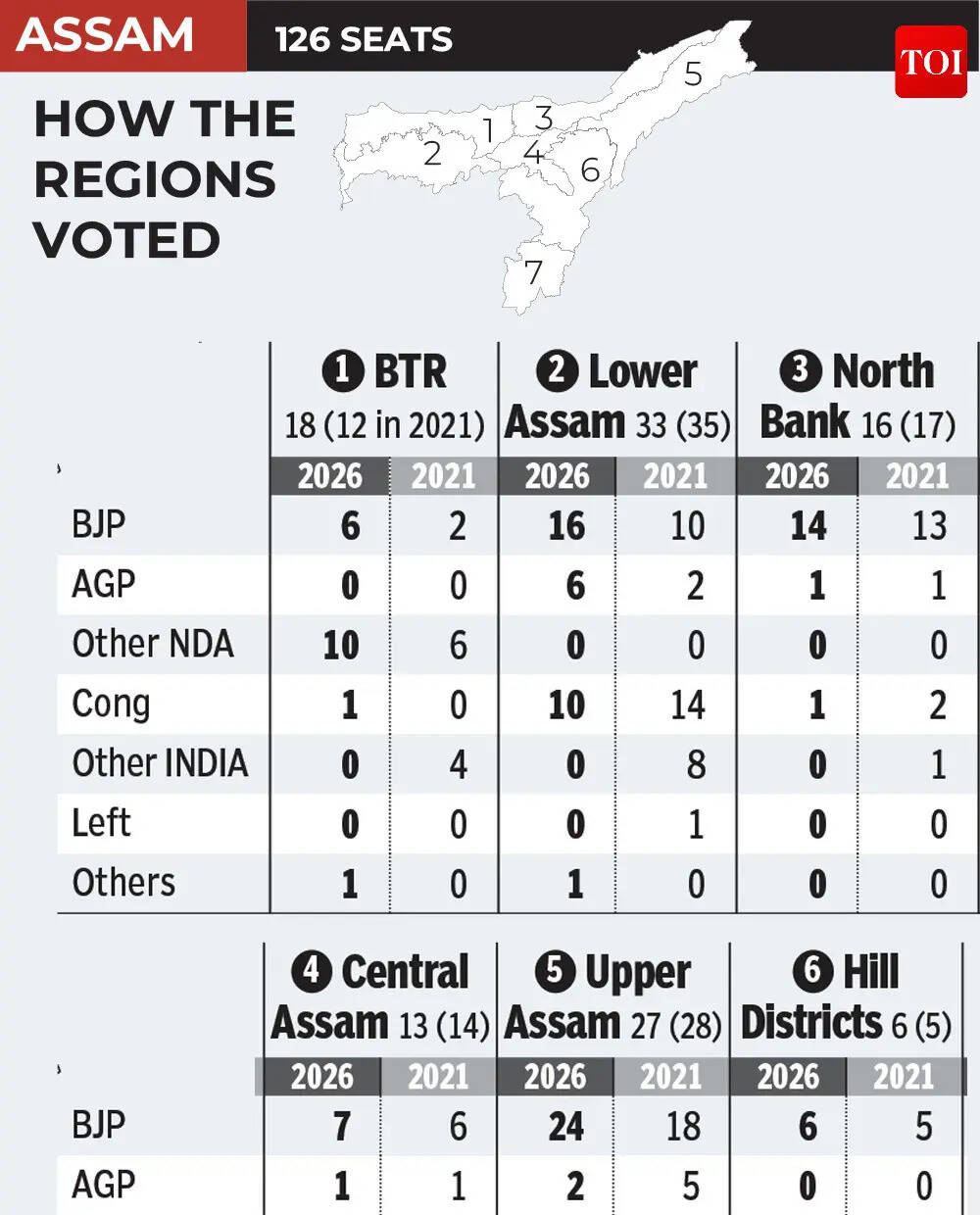
How regions in Assam voted
The coalition arithmetic succeeded largely because of Sarma’s political networks and familiarity with the region’s fragmented power structure. He had longstanding ties with leaders of the Bodoland People’s Front, understood the electoral dynamics of the Asom Gana Parishad from years of political competition, and possessed a far deeper grasp of the Northeast’s political terrain than most BJP strategists operating from Delhi.On May 24, 2016, BJP formed its first-ever government in Northeast India with Sarbananda Sonowal as chief minister and Sarma was sworn in as cabinet minister with four crucial portfolios of finance, health, education, and public works.That same day, the North East Democratic Alliance (NEDA) was created, with Sarma appointed as its convenor. This was not ceremonial as the NEDA meant all seven Northeast states would coordinate their alliances through Himanta’s office, making him the BJP’s single-point coordinator for the entire region.12 elections, one architectSarma’s strategic intervention transformed BJP’s Northeast presence across multiple states and elections:
- Assam 2016: BJP won 60 of 126 seats with a 29.5% vote share, forming its first government in Assam. Along with allies Asom Gana Parishad (AGP) and Bodoland People’s Front (BPF), the NDA secured 87 seats, marking the party’s breakthrough in the Northeast.
- Assam 2021: BJP retained 60 seats despite BPF shifting to the Congress alliance. With AGP winning nine seats and United People’s Party Liberal (UPPL) six, the NDA returned with 75 seats.
- Assam 2026: BJP crossed the majority mark on its own for the first time, winning 82 seats as the NDA tally rose to 102, securing a third consecutive term.
- Tripura 2018: BJP won 35 of 60 seats, ending the Left Front’s 25-year rule. Ally Indigenous People’s Front of Tripura (IPFT) added eight seats.
- Tripura 2023: BJP retained power with 32 seats after replacing Chief Minister Biplab Kumar Deb with Manik Saha ahead of the polls to counter anti-incumbency.
- Nagaland 2018 & 2023: Sarma played a key role in sustaining the BJP’s alliance with Neiphiu Rio-led Nationalist Democratic Progressive Party (NDPP), ensuring coalition stability.
- Meghalaya 2018 & 2023: Despite limited BJP numbers, Sarma remained central to post-poll negotiations, helping the party stay relevant in coalition politics.
- Arunachal Pradesh 2016: BJP became the dominant force after Pema Khandu and several MLAs shifted from the People’s Party of Arunachal (PPA), giving the party a majority.
- Manipur 2017 & 2022: BJP stitched together a coalition after a hung verdict in 2017 and returned with a stronger mandate in 2022.
The unparallel ascent Unlike many leaders who rose through the Sangh ecosystem, Sarma entered the party without years of RSS grooming or a long stint in the cadre hierarchy. A Guwahati-born Brahmin who trained in medicine before entering politics, his ascent within the BJP has been driven less by ideological pedigree and more by political utility.Over the past decade, the BJP transformed the Northeast from a region once dominated by the Congress into one where the party now leads governments in Assam, Tripura, Arunachal Pradesh and Manipur, while the National Democratic Alliance (NDA) remains part of ruling arrangements across all eight northeastern states.The 2026 Assam assembly election marked the high point of that expansion with BJP’s 82 seats in Assam. A new trifecta?The comparison between Himanta Biswa Sarma, Devendra Fadnavis and Yogi Adityanath highlights the different routes through which influential BJP leaders have emerged within the party’s power structure.
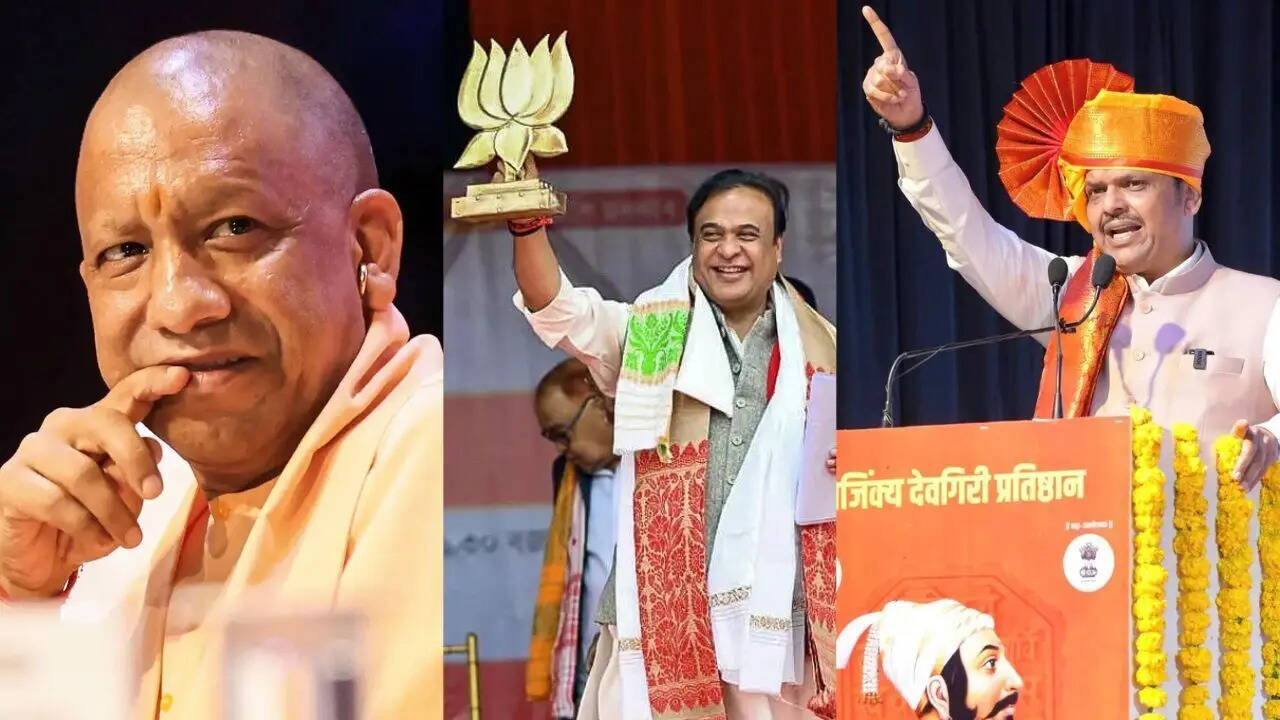
(From left) Uttar Pradesh CM Yogi Adityanath, Assam CM Himanta Biswa Sarma and Maharashtra CM Devendra Fadnavis.
Fadnavis rose through the Rashtriya Swayamsevak Sangh (RSS) and Akhil Bharatiya Vidyarthi Parishad (ABVP) ecosystem from a young age before becoming Maharashtra chief minister in 2014. Even after the BJP briefly lost power in 2019, he remained central to the party’s political strategy in the state, eventually returning to government and consolidating his position as one of the BJP’s most important leaders in western India.Yogi Adityanath followed a markedly different trajectory. Associated with the Akhil Bharatiya Vidyarthi Parishad (ABVP) in his youth before entering monastic life under the Gorakhnath Math, he built his political identity through a blend of religious influence and electoral consolidation in Uttar Pradesh. Since becoming chief minister in 2017, he has emerged as one of the BJP’s most prominent mass leaders, leading the party back to power in 2022 on the back of what supporters describe as the “Yogi model”, centred around a strong emphasis on law and order, administrative centralisation and welfare delivery.Sarma’s rise, however, has followed neither the organisational path of Fadnavis nor the ideological-religious route associated with Adityanath. Apart from overtly imbibing the BJP’s politics of Hindutva, what ultimately connects all three leaders is their ability to produce sustained electoral results in politically crucial states and Fadnavis stabilised the BJP’s position in Maharashtra, Adityanath consolidated the party’s dominance in Uttar Pradesh, while Sarma helped transform the Northeast from a historically Congress-dominated region into one where the BJP and the NDA now hold influence across all eight states.The troubleshooter tagWorking in coordination with the Amit Shah-led Union home ministry, Himanta Biswa Sarma emerged as one of the BJP’s principal political negotiators in the Northeast’s long-running insurgency landscape. During the BJP’s tenure in Assam, the Centre signed a series of major peace accords with armed and ethnic groups, including the 2020 Bodo Peace Accord with factions of the National Democratic Front of Bodoland (NDFB), the 2021 Karbi Anglong agreement with five insurgent organisations, the 2022 Adivasi peace pact, and the 2023 agreement with the pro-talks faction of ULFA.
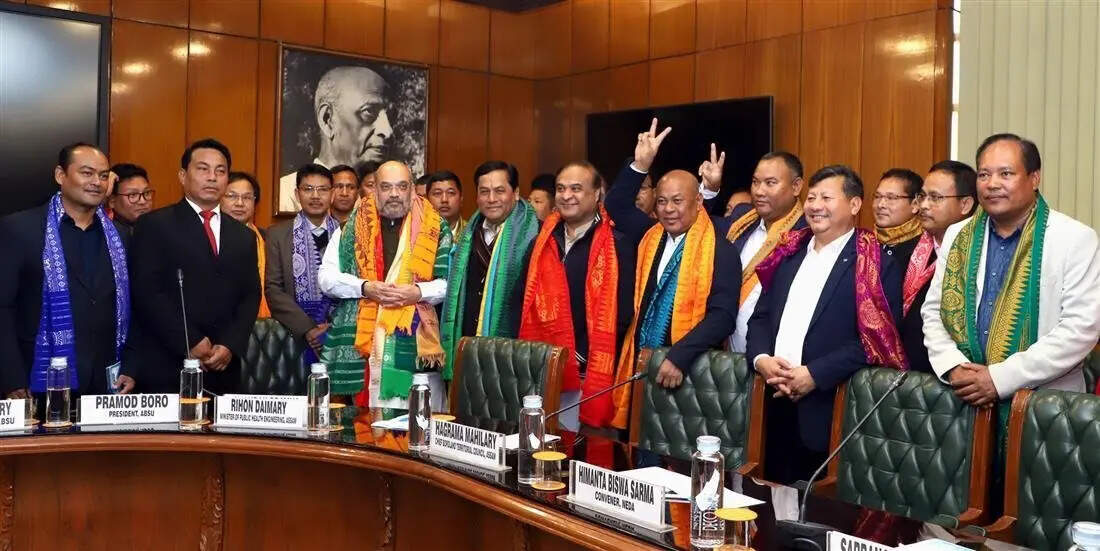
Union home minister Amit Shah, Assam CM Sarbananda Sonowal and others after the signing of an accord between GOI, Assam Govt and Bodo representatives, in New Delhi. (2020)
The accords, which focused on disarmament, rehabilitation, economic packages and greater political representation, helped bring thousands of former militants into the mainstream. Alongside security operations and tighter border management, the agreements became central to the BJP’s broader political narrative that the Northeast was gradually shifting from decades of insurgency-driven instability towards infrastructure-led development and deeper integration with the national mainstream.With the National Democratic Alliance (NDA) securing 102 seats in the 126-member assembly, the mandate reinforced Sarma’s position within the BJP’s emerging regional power structure. Over the past decade, he has evolved from a state-level strategist into one of the party’s most influential political managers, with a role that now extends beyond Assam into the wider Northeast through coalition management and electoral coordination.
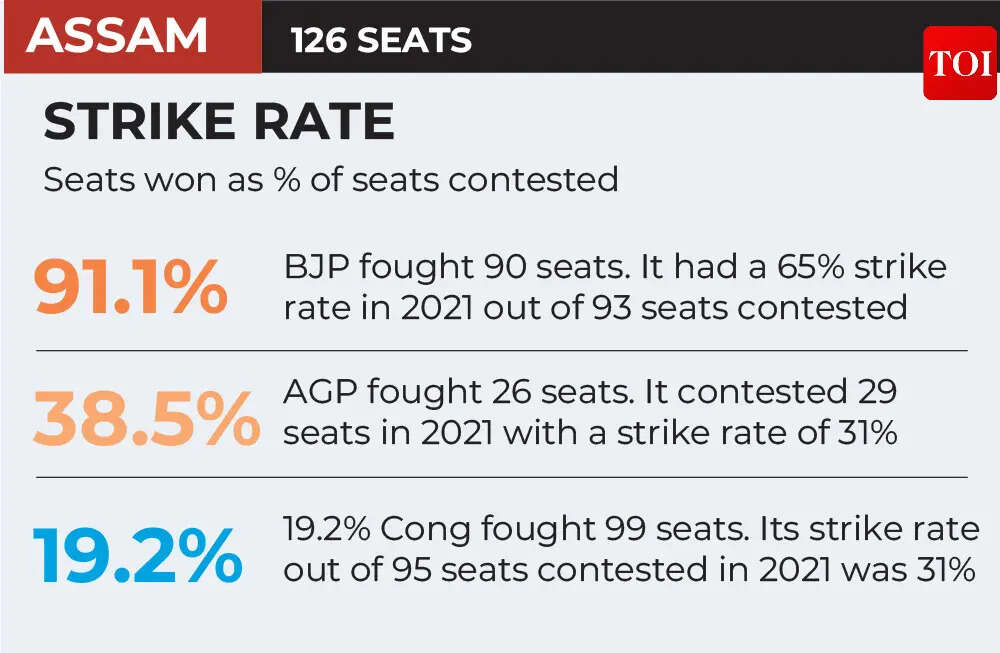
Strike rate in 2026 Assam polls
In many ways, Himanta Biswa Sarma’s rise reflects the BJP’s evolving internal power structure, where a leader once seen as a political outsider to the Sangh ecosystem now finds himself counted among the party’s emerging next-generation power centres, not through organisational lineage but through sustained electoral success and strategic expansion in one of India’s most politically complex regions.