Xplorich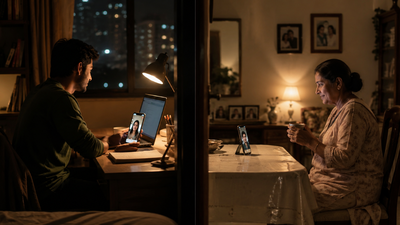
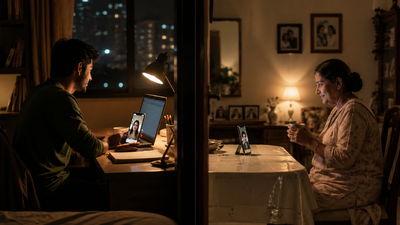
The kitchen still smells the same, but no one’s cooking for three anymore. The light over the dining table, once dimmed by 9 pm to signal the end of the day, now stays on whenever someone feels like it, or off, for weeks, when the house empties out entirely.Across Indian cities, a quiet shift is unfolding inside homes that once held three generations under one roof, or at least two. Adult children are moving out, for jobs, for marriages, for the simple desire to live alone, and parents, many of them only in their late fifties or sixties, are staying behind in houses suddenly too large for the number of people living in them. It is not the dramatic, often-discussed migration of the elderly into old-age homes. It is subtler, and in some ways more disorienting: a slow unlearning of a domestic rhythm that had defined decades.For the parents, the adjustment shows up in small ways, cooking portions that don’t shrink fast enough, reaching for a second teacup out of habit, the strange quiet of a phone that used to ring with “what’s for dinner” questions. For the adult children, there’s often a mix of relief and guilt: the freedom of living on their own terms, paired with the persistent awareness of an empty room back home and a parent who insists, every single time, that they’re “doing just fine.”The joint family ideal, even when it existed more in aspiration than reality, cast living separately as something temporary, something that happens before someone eventually moves back in. Increasingly, that return isn’t coming. And families are having to figure out, often without any script to follow, what closeness looks like when it’s no longer measured by shared walls.
Love, long-distance
Every family, it turns out, eventually invents its own grammar for staying in touch. For some, it’s a 9 pm video call that has become as fixed a ritual as dinner once was, a small rectangle of light where a mother holds up whatever she’s cooked that day, angling the phone toward the pot before turning it back to her own face. For others, it’s quieter: a good-morning text, a forwarded article, a voice note left at an odd hour because someone was thinking of something and wanted to say it before it slipped away.These exchanges can look, from the outside, almost trivial, a photo of a plate of food, a two-line message about the weather, a meme sent without comment. But for many parents, they function as proof of life, small signals that say: I am still here, I am still part of your day.What’s harder to navigate is the unspoken arithmetic of how much is too much. Adult children describe a particular kind of guilt that comes with not picking up a call immediately, or with realizing a parent has been waiting, not impatiently, just waiting, for a response that didn’t come during a busy workday. Parents, in turn, often describe holding back, counting the hours before they allow themselves to call again, careful not to seem like they’re checking up.
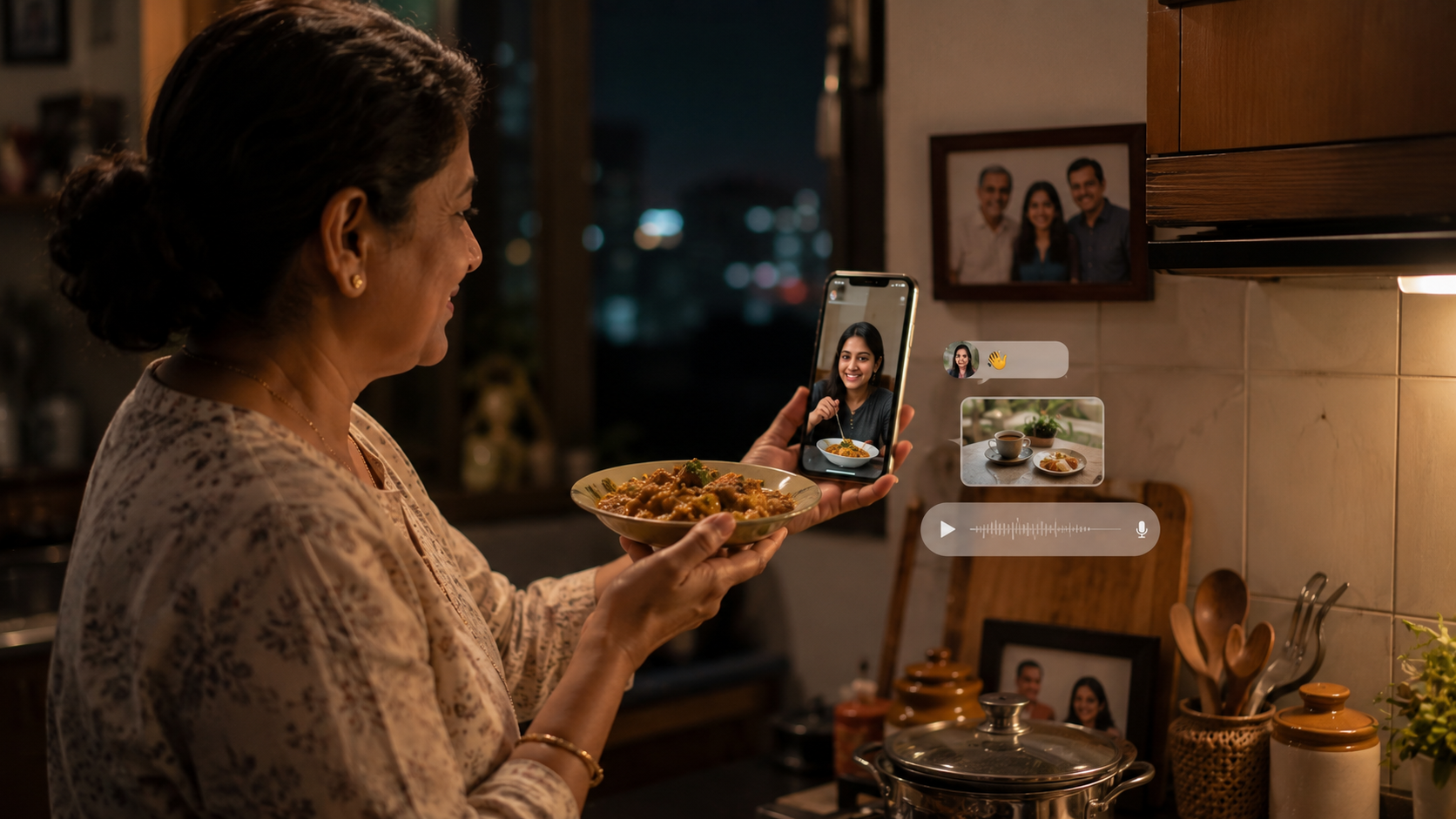
AI generated image
Sonia, whose daughter is away for higher studies, knows this balancing act well. ” As parents, we naturally want to know whether they have eaten, reached home safely, or are doing okay. But we also understand they are adults now and need their own space. Sometimes I stop myself from calling and wait for them to contact me. Usually, I send a simple message rather than calling unexpectedly. If I haven’t heard from them for a day or two, I feel it’s perfectly okay to check in. It’s a balance between caring for them and respecting their independence,” she said.Both sides are essentially performing the same calculation from opposite ends: how do you stay close without becoming a presence that feels like surveillance, or a silence that feels like distance?Technology has not solved this so much as given it new shapes. A video call can show a parent’s face but not whether they’ve eaten properly. A long voice note can convey warmth but also, sometimes, loneliness disguised as updates about the neighbours. Several families described developing small codes—certain phrases, certain times of day—that signal more than they say outright.What emerges is not a story of families drifting apart, but of relationships being renegotiated in real time, often without either side naming what’s happening. The emotional intimacy hasn’t necessarily decreased; it has migrated, onto screens, into voice notes, into the rhythm of when someone replies and when they don’t, and in doing so, it has revealed just how much unspoken communication once happened simply by being in the same house.
When ‘visiting home’ becomes the relationship
For many families, the calendar itself has quietly become the relationship. A long weekend, a festival, a wedding in the extended family, these are no longer just occasions, but the windows through which most of the year’s parenting and being-parented now happens. Conversations that might once have unfolded gradually, over weeks of ordinary evenings, now get compressed into forty-eight or seventy-two hours, with everyone aware, even if unspoken, that the clock is running.This compression changes the texture of the time itself. Visits often carry an undercurrent of performance, which is not exactly dishonesty but an agreement to present the best version of things. Parents cook the dishes their children miss most; children try to seem more settled, more cheerful, less tired than they actually are. Difficult topics like a job that isn’t going well, a parent’s health concern, a disagreement that has been simmering, often get tabled, because nobody wants to “waste” the short time together on conflict.
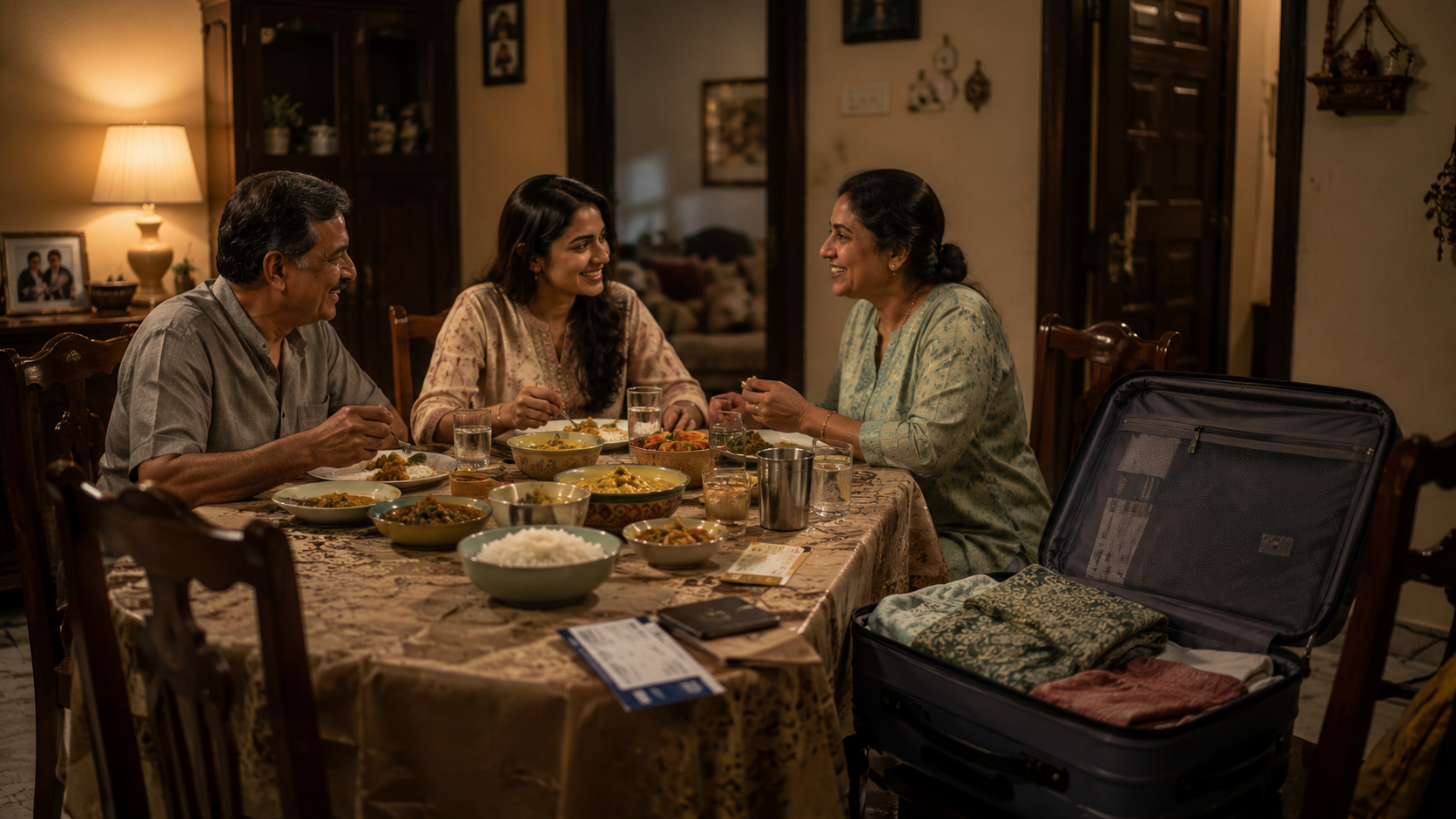
AI generated image
There’s also a strange inversion that happens: instead of daily life accommodating the relationship, the relationship now has to be scheduled around daily life. A child’s leave application becomes the unit by which a parent measures how long until they’ll next see them. A festival that once was simply a festival now carries the additional weight of being a deadline, the date by which family will, once again, be in the same room.What gets lost in this rhythm is often the ordinary. The mundane, low-stakes moments, a child casually mentioning a small worry over breakfast, a parent thinking aloud about a minor decision, rarely survive the journey into a scheduled visit. They require the kind of unstructured time that brief visits don’t allow.Senjuti, who has been living away from home for the past four years for her studies, has noticed this shift clearly. “Yes, when I used to live with my parents they used to know every mundane thing about my life, now we only talk about it something big has happened,” she said.Still, for many families, these brief visits have become more meaningful. Even if the time is short, it’s proof that the relationship can hold together, just in smaller, more concentrated doses.