Xplorich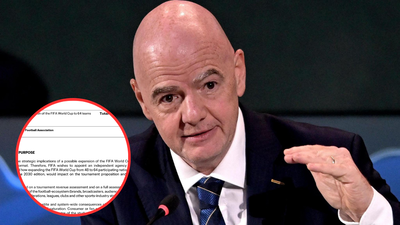
FIFA has accelerated work on a possible expansion of the men’s World Cup to 64 teams, launching a rapid consultation process that could pave the way for the enlarged format to be introduced as early as the 2030 tournament.The move comes as FIFA president Gianni Infantino faces mounting pressure over his separate proposal to establish FIFA Forward Enterprise (FFE), a new commercial entity that would sell a minority stake in the governing body’s commercial rights to private investors. While that proposal has triggered opposition from UEFA, Concacaf and the Asian Football Confederation (AFC), along with the resignation of senior adviser Carlos Cordeiro, FIFA has now begun exploring another significant change to its flagship competition.
FIFA begins accelerated consultation
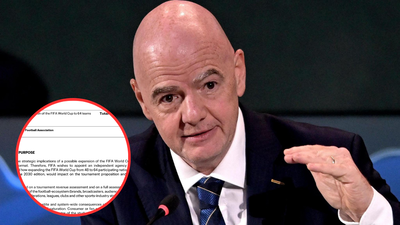
According to an internalprivate document first reported by The Times’ Martin Ziegler, FIFA circulated a research brief on Thursday seeking proposals from independent agencies to assess the implications of expanding the World Cup from 48 to 64 teams.The governing body said it wants to appoint an independent agency to evaluate not only the commercial impact of a larger tournament but also its wider effects across football.The brief states that the assessment should examine the proposal “through the eyes of the football ecosystem”, including broadcasters, sponsors, brands, national associations, confederations, leagues, clubs, media companies and other industry stakeholders.Rather than focusing primarily on supporters, FIFA instructed that any consumer research should remain secondary to what it described as a business-to-business assessment of the tournament’s long-term viability, commercial opportunities and the potential risks of market saturation.
Decision timeline set for August
The documents outline an unusually compressed timetable.Interested agencies have until 7 August to submit proposals, with FIFA planning to select a successful bidder by 14 August.The completed analysis is then scheduled to be delivered on 11 September, just eight days before FIFA’s 211 member associations are due to vote on the proposed creation of FIFA Forward Enterprise and the associated investment package.Should FIFA ultimately proceed, the expanded format would be introduced at the 2030 World Cup, only one edition after this summer’s tournament became the first to feature 48 teams following the expansion from 32.Also read: Top FIFA adviser quits, denounces World Cup plan as ‘a bad deal for football’
2030 World Cup already under pressure
The 2030 tournament is due to be hosted primarily by Spain, Portugal and Morocco, with additional centenary matches scheduled in Uruguay, Argentina and Paraguay to mark 100 years since the first World Cup.However, the potential expansion to 64 teams has raised fresh questions over the feasibility of the hosting arrangement, with concerns that a significantly larger tournament could place further strain on logistics across three main host nations and three additional ceremonial venues.The situation is further complicated by UEFA’s warning that it could boycott FIFA competitions if the FFE privatisation plan is approved. Such a move would directly impact the 2030 World Cup, where Spain and Portugal are co-hosts, raising the prospect that two of the primary host nations could be absent from their own tournament if European federations follow through on their threat.
Expansion proposal resurfaces
Although the 48-team format only debuted at the 2026 World Cup, the possibility of expanding to 64 teams has remained under discussion within football.South American governing body CONMEBOL formally backed the idea in 2025, but the proposal has previously faced resistance elsewhere.AFC president Sheikh Salman bin Ibrahim Al Khalifa has warned that further expansion could create “chaos”, while Concacaf president Victor Montagliani has questioned whether another increase would be in the best interests of the wider football ecosystem.If implemented, the World Cup would double in size within just eight years, having expanded from 32 teams to 48 in 2026 before potentially increasing again to 64 in 2030.
Separate investment proposal continues to dominate debate
The consultation on tournament expansion comes against the backdrop of FIFA’s ongoing governance dispute over the proposed creation of FIFA Forward Enterprise.Under that proposal, FIFA would retain majority ownership while selling a 20% minority, non-controlling stake in a new commercial subsidiary responsible for broadcasting, sponsorship, ticketing and licensing rights, valuing the business at around $20 billion and raising an estimated $4.2 billion. FIFA has also promised member associations up to $40 million in development funding if the proposal receives majority backing before the 19 September deadline.The proposal has been rejected by UEFA, Concacaf and the AFC, while UEFA has warned it will boycott FIFA competitions, including the men’s and women’s World Cups, should the plans proceed. FIFA has defended the proposal, insisting that “nobody is selling football” and maintaining that any decision will be made through a consultation process involving all 211 member associations.The backlash also prompted the resignation of Infantino’s senior adviser Carlos Cordeiro, who said he opposed the proposal “unequivocally” and described it as “a bad deal for football”.Also read: Top FIFA adviser quits, denounces World Cup plan as ‘a bad deal for football’
FIFA presses ahead on multiple fronts
Despite facing its most significant governance challenge in years, FIFA has shown no sign of slowing its broader agenda for the future of the World Cup.While member associations continue to debate the proposed commercial restructuring, the governing body is now simultaneously examining whether its flagship tournament should grow once again, with an independent assessment expected before members vote on the investment proposal later in September.The parallel timing of the two initiatives has fuelled growing speculation over FIFA’s broader endgame, with critics questioning whether the expansion of the World Cup and the creation of FFE are being developed in tandem as part of a wider commercial strategy. Some within the game believe the two proposals are closely linked: a larger tournament would generate significantly more broadcast and sponsorship inventory, potentially increasing the value of any future commercial stake sale, while also making the World Cup a more attractive asset for outside investors.Supporters of the plan argue it is about unlocking long-term revenue and global growth, but opponents see a more strategic alignment between expansion and privatisation, warning that the governing body risks reshaping the World Cup primarily as a financial product rather than a sporting competition.The findings of the upcoming independent study are therefore expected to carry significant weight—not only in determining whether a 64-team World Cup becomes reality, but also in shaping the broader debate over who ultimately benefits from FIFA’s accelerating commercial transformation of the global game.