Xplorich
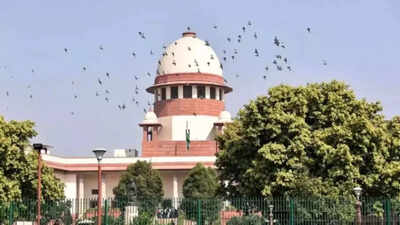
NEW DELHI: A trial court’s failure to evaluate the evidence properly and the Odisha High Court remaining a mute spectator resulted in 22 years being erased from a person’s life as he was wrongly convicted and his appeal was not heard by the high court. Finally, the Supreme Court has come to his rescue and acquitted him.It is a classic case where a poor litigant’s fight for justice is frustrated at the altar of the judiciary itself, when the court refused hearing on technical grounds. The poor convict had already spent 12 years in jail when he approached the high court. The high court refused to hear him on the technical ground that there was a delay in filing an appeal, and it prolonged his stay in jail by 10 more years before he was acquitted by the Supreme Court, which had to admit that “access to justice still eludes the marginalised sections of our society and especially those convicted and imprisoned from among them”.“We are deeply dismayed, and equally perturbed by the order which rejected an application seeking condonation of delay of 3,157 days and as a consequence dismissed the ‘Jail Memo of Appeal’ against the order of conviction under Section 302, with sentence imposed of life imprisonment where the convict had, at the time of the impugned order suffered incarceration of 12 years and now a further period of 10 years; a total of 22 years,” a bench of Justices J B Pardiwala and K Vinod Chandran said.It said the high court ought to have also considered that it was an appeal through jail and the court ought to have taken a practical view, or rather a sympathetic view, of the matter and at least ought to have condoned the delay to give one opportunity to the petitioner to argue his criminal appeal on the merits.“When the three pillars of democracy consistently endeavour to bring legal aid to the doorsteps of every citizen, especially the poor…we…should sensitise ourselves in taking a liberal approach…Not a mere liberal approach but a pro-active one to condone delay, however large it is, when a convict knocks at the door of a Court…which in the present case raises some real concerns,” the bench said.
Share your thoughts in the comments
Be respectful · TOI community guidelines
Examining the evidence, the court concluded that it was not a fit case of conviction on the basis of a sole eyewitness, which was not reliable and was shaky. It acquitted him in a triple murder case.“… a person taken into custody on mere suspicion from whom a confession, though not admissible, was extracted employing third-degree methods, the trial court fails to evaluate the evidence properly, and the high court remains a mute spectator…resulting in 22 years being erased out of a person’s life without any reliable evidence,” the court said.