Xplorich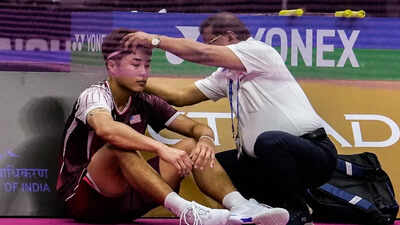
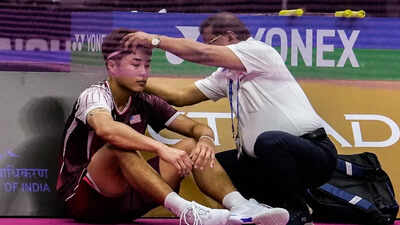
New Delhi: In a sport decided by precision and where the smallest margins can separate a winner from a loser, the most talked-about variable at the Indira Gandhi (IG) indoor stadium is something players cannot see. It is the air.At the BWF World Championships, the much-discussed “drift” has emerged as an additional tactical challenge, compelling shuttlers to recalibrate their strokes, movement and shot selection almost from rally to rally. With air-conditioning and ventilation creating differing currents across the arena, the four courts are not playing alike — and even the two ends of the same court can demand different solutions.The effect is most pronounced on Centre Court 1 and adjacent Court 3, where airflow from the AC vents creates noticeable side drift. Court 2 has also shown some movement, though comparatively less troublesome, while Court 4, farther from the strongest vents, has remained largely stable.For players, that difference can be decisive.Lakshya Sen experienced it immediately in his opening-round victory over Austria’s Collins Valentine Filimon. The Indian struggled to find his range early, particularly with delicate net play, before shrinking his stroke production and bringing Filimon into longer exchanges.“I adapted after the change of ends, opened up the rallies and stopped playing the short, flat exchanges that had initially allowed him (Filimon) to dictate,” Sen had said after his win. The conditions, however, were not the sole reason for Sen’s defeat to American Garret Tan on Wednesday.Kodai Naraoka’s assessment was even more revealing. In his three-game victory over Chi Yu Jen, the Japanese shuttler found one half markedly quicker while the opposite side appeared to hold the shuttle back. The contrast was stark enough to contribute to a 21-12, 7-21, 21-16 scoreline. “The side opposite to the audience was the fast one. On the other hand, the shuttle was not travelling for me. It was sometimes stopping before I could reach the net,” Naraoka said.Ayush Shetty’s headline-making upset of world No. 1 and defending champion Shi Yu Qi was also a case in point. Shetty prevailed 21-14, 13-21, 21-19, but the Chinese star repeatedly appeared uncomfortable when playing from the more difficult end on the Centre Court, particularly while lifting the shuttle.Coach Vimal Kumar felt the drift affected Shi’s judgement and timing, especially when he had to send the shuttle high and deep. “The challenge in drifty conditions is that once the shuttle is in the air, it can float unpredictably, making it difficult to make the perfect connection when attacking, especially on the smash,” he explained.Canadian Victor Lai described the shuttle as unusually floaty and said players had to shorten their swings, sharpen their strokes and be wary of cross-court shots being carried beyond the lines. “…Got used to the conditions a bit better. One side there’s drift: one side is slower and one side’s faster. The side drift’s not crazy strong, but still a little bit. The wind blows the shuttle very strong. But honestly, I have kind of gotten used to it a lot of places like this, China, Singapore, Indonesia, Thailand too, a lot of these Asian countries have this sort of drift. I won’t say like I am perfect, but I am getting used to it,” he told BWF media.The drift has also been part of the backdrop to Indian losses on Court 3, including men’s doubles pair M R Arjun and H Amsakarunan’s defeat to South Korea’s M H Kang and D Ki. Unnati Hooda, who pushed Michelle Li to 23-21 in the decider, also saw crucial side pushes drift beyond the lines.“It was for both (the drift). We have to adjust to conditions as players. I thought of switching to flick serves but then didn’t do it,” Unnati said.While badminton remains a game of skill, nerve, execution and tactics, but in Delhi, players are discovering that mastering the air is equally important.Box Items: WHAT’S DRIFT?Drift is the sideways or directional movement of air inside an indoor badminton hall. Unlike outdoor wind, it is generated by ventilation, air-conditioning, temperature differences, humidity, doors opening and closing, and even crowd movement. When the shuttle enters a moving air current, its trajectory can change subtly but significantly.HOW DRIFT CHANGES THE GAMEA shuttle travelling with the airflow can move faster or carry deeper; against it, the same stroke may slow, dip or fall short. Cross-drift can push flat shots and lifts sideways. Players therefore alter racket speed, swing length, smash power, lift height and positioning. The result is a constant process of recalibration — especially when changing ends, where the same shot may require a completely different touch.